AI Doesn't Fail for Lack of Chips — It Fails for Lack of Infrastructure
xAI's Colossus supercomputer shows that the real obstacle to AI expansion isn't chips, but energy and environmental permitting.
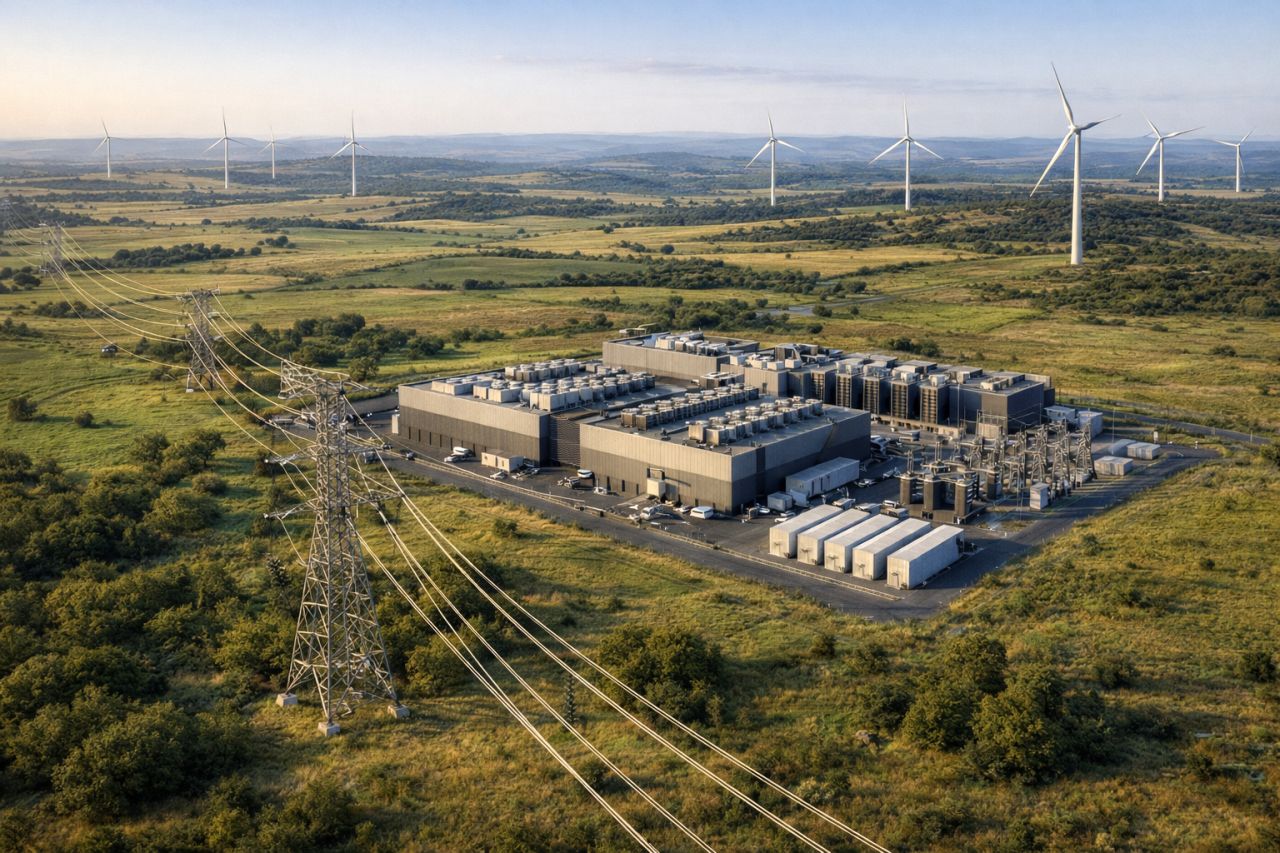
Major technological revolutions rarely fail for lack of innovation — they almost always fail because of infrastructure. xAI's Colossus supercomputer is a perfect example: Elon Musk envisions a future of AI data centers in space, but for now these systems still depend on electrical grids, environmental permitting and legal frameworks.
The real bottleneck: energy and permitting
In July 2024, xAI installed a data center in Memphis, repurposing an old factory to speed up construction. The available grid had only 8 MW of capacity, insufficient for a system with over 100,000 NVIDIA H100 GPUs. The solution was to install mobile natural-gas turbines under temporary licenses — by April 2025 there were 35 turbines, with an estimated 422 MW of power. The Environmental Protection Agency (EPA) ruled that the solution did not meet legal requirements, since emissions and noise don't cease to exist just because equipment is "temporary," and cumulative impacts count.
Portugal has a real opportunity to attract large-scale energy and digital infrastructure — from data centers to hydrogen, BESS or energy-intensive industry projects — but projects need to be born already aligned with the environmental, energy and legal framework, not simply validated at the end of the process. This is where StartSimple helps developers and investors identify viable locations, anticipate regulatory constraints and structure robust permitting strategies.